
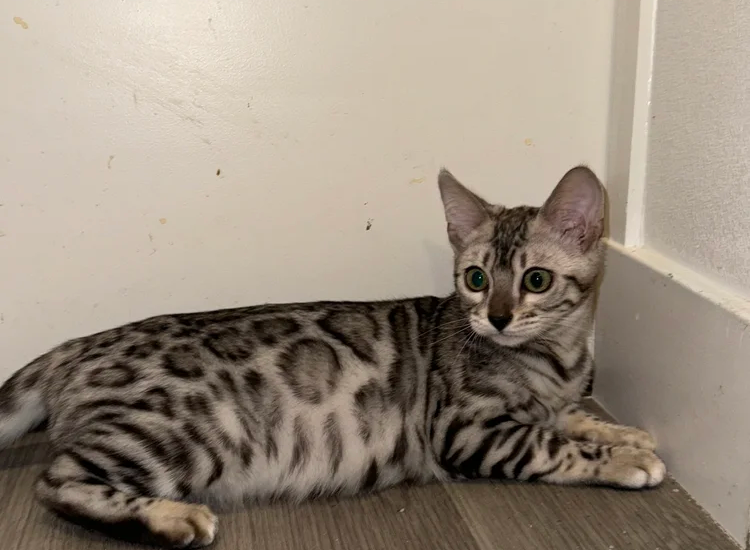
Bengal kittens are known for their wild appearance, athletic build, and energetic personalities. One of the most common questions new owners ask is about Bengal kittens size—how big they are at different ages and how large they will become as adults.
In this guide, we’ll cover Bengal kitten size by age, weight expectations, growth patterns, and factors that influence their final size.
Bengal Kittens Size at Birth
At birth, Bengal kittens are surprisingly small despite their strong genetics.
- Average weight: 2.5 to 4 ounces (70–115 grams)
- Length: Around 6–8 inches
- Appearance: Tiny, fragile, eyes closed, ears folded
Even though they come from a muscular breed, Bengal kittens rely completely on their mother during the first few weeks.
Bengal Kittens Size by Age (Growth Chart)
Bengal kittens grow rapidly, especially during the first six months. Below is a general size chart:
1–4 Weeks Old
- Weight: 6–16 ounces
- Size: Small and delicate
- Development: Eyes open, beginning to crawl
2 Months Old
- Weight: 2–4 pounds
- Length: 10–12 inches
- Growth note: This is when Bengal kittens start showing their athletic build
3 Months Old
- Weight: 4–6 pounds
- Size: Lean but muscular
- Behavior: Very active, climbing and jumping
4–6 Months Old
- Weight: 6–9 pounds
- Length: 12–16 inches
- Growth spurt: One of the fastest growth stages
9–12 Months Old
- Weight: 8–12 pounds
- Size: Nearly adult height, still filling out
How Big Do Bengal Cats Get as Adults?
Adult size depends on gender, genetics, and nutrition.
Adult Male Bengal Size
- Weight: 12–18 pounds
- Length: Up to 18 inches (not including tail)
- Build: Large, muscular, athletic
Adult Female Bengal Size
- Weight: 8–12 pounds
- Length: Slightly smaller than males
- Build: Lean and agile
Bengals are considered a medium to large cat breed, often larger than domestic shorthairs.
When Do Bengal Kittens Stop Growing?
Although Bengal kittens grow quickly early on, they don’t fully mature until:
- Physical growth: 12–16 months
- Muscle development: Up to 24 months
This extended growth period is why Bengals look lean as kittens but become heavily muscled adults.
Factors That Affect Bengal Kittens Size
Several elements influence how large a Bengal kitten will grow:
1. Genetics
Kittens from larger parents tend to be bigger. Early-generation Bengals (closer to Asian Leopard Cats) may grow larger.
2. Diet & Nutrition
High-protein diets are essential for proper growth. Poor nutrition can stunt size.
3. Gender
Males are consistently larger than females.
4. Activity Level
Bengals are extremely active, which helps develop muscle rather than excess fat.
Is My Bengal Kitten Too Small?
Many owners worry about size comparisons. Bengal kittens naturally grow at different rates. Signs of healthy growth include:
- Steady weight gain
- High energy levels
- Strong appetite
- Clear eyes and coat shine
If your Bengal kitten is underweight or lethargic, consult a veterinarian.
Bengal Kittens Size vs Other Breeds
Compared to common cat breeds:
- Larger than: Siamese, Domestic Shorthair
- Similar to: Maine Coon kittens (early stages)
- Smaller than: Adult Maine Coons
What makes Bengals unique is their dense muscle mass, not just length or height.
Final Thoughts on Bengal Kittens Size
Understanding Bengal kittens size helps owners provide proper nutrition, space, and expectations as their kitten grows. While they may start small, Bengals quickly transform into powerful, athletic cats with impressive size and presence.
With proper care, your Bengal kitten will grow into a healthy, muscular adult that truly reflects the breed’s wild beauty.