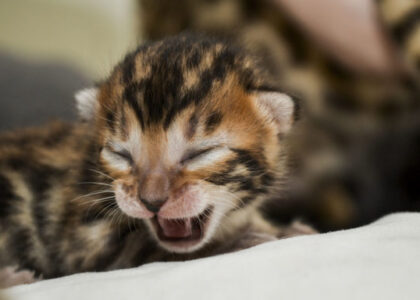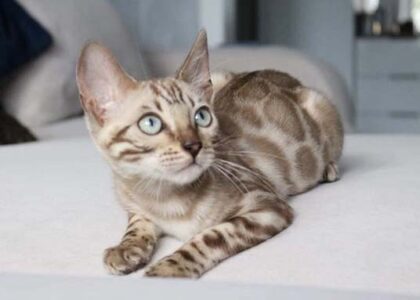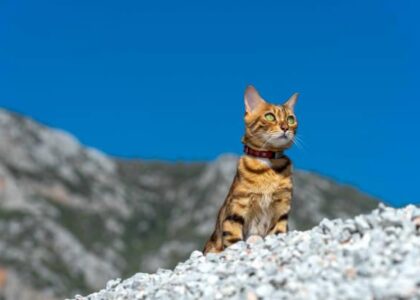
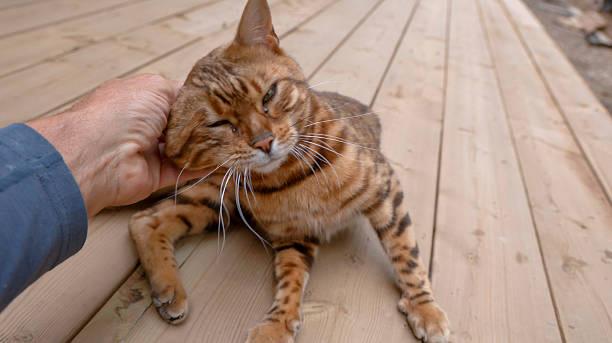
Bengal cats can be wonderful companions when their needs are properly met and they’re raised in a supportive environment. Unfortunately, a lot of information online paints a very different picture, often claiming that Bengals are riddled with health or behavioral problems. These claims are largely inaccurate. Much of the negativity surrounding Bengals comes from misunderstandings, opposition to breeding or hybrid cats, and the tendency to apply traits seen in early-generation Bengals to the entire breed.
Common Myths About Bengal Cats
There’s no shortage of misleading claims online questioning whether Bengals make good pets. Some of the most common myths suggest that Bengals are destructive, difficult to live with, or prone to serious health issues. This type of misinformation discourages potential owners, even though it doesn’t reflect the reality of well-bred, properly cared-for Bengals.
One of the biggest misconceptions is that Bengals are wild or destructive by nature. While Bengals are energetic and intelligent, this doesn’t mean they’re destructive. Like many active cats, they thrive when provided with toys, climbing structures, and mental stimulation. Most of the day, a Bengal is just as likely to be relaxing, sleeping, or playing as any other cat. They’re also highly trainable, making it easier to redirect unwanted behaviors. As with all breeds, Bengal kittens tend to be more energetic, but this naturally settles as they mature.
Another frequent myth is that Bengals are territorial or aggressive. In reality, Bengals are known for being social and engaging. They typically enjoy interacting with people and often coexist well with other pets. Some sources portray Bengals as dangerous or overly aggressive due to their supposed “wild instincts,” but in most cases, behavioral issues can be traced back to poor socialization or improper care. When raised and handled correctly, Bengals are no more aggressive than other domestic cats and often thrive in active, social households.
Why Bengal Cats Often Get a Bad Reputation
There are several reasons Bengals have developed a negative image online. Some owners who’ve had difficult experiences with poorly socialized cats assume the issues are breed-related rather than situational. In other cases, writers repeat inaccurate information they’ve found elsewhere—often without any firsthand experience owning a Bengal. While these factors contribute to the problem, much of the criticism comes from people who are opposed to breeding or hybrid cats altogether.
Public perception of breeders has also played a role. Stories of unethical breeding practices and animal mistreatment have led many people to believe that all breeders are irresponsible. While unethical breeders do exist, many others are knowledgeable, ethical, and deeply committed to the health and welfare of their cats. This is why careful research is essential when choosing a breeder—though this nuance is rarely acknowledged online.
Another common source of misinformation is the belief that Bengals retain harmful traits because of their hybrid origins. Many articles blame behavioral or health problems entirely on genetics, without considering environment, care, or generational differences. For example, some media outlets have claimed Bengals suffer from behavioral issues such as inappropriate urination or digestive problems due to their “wild genes.”
What’s often left out is that such issues were primarily observed in early-generation Bengals (F1 and F2), which are more closely related to the Asian Leopard Cat.
Our Bengals are F5 generation, classified as SBT (Stud Book Traditional), meaning they are fully domesticated. At this stage, Bengals are bred only with other F5 Bengals, and the proportion of wild ancestry remains stable. There are no further hybrid generations beyond this point.
Despite this, traits seen in early generations are frequently—and unfairly—used to judge the breed as a whole. Many online sources continue to repeat these outdated claims, contributing to an inaccurate and undeserved reputation for Bengal cats.