As a breeder who has invested years of care and dedication into raising strong, healthy cats, I believe pet owners deserve straightforward, transparent information—especially about vaccines. While rabies vaccination is legally required in many places, it’s important to understand that not all rabies vaccines are the same. Some options are significantly safer than others, yet the potential risks tied to certain ingredients are rarely discussed openly.
In this article, I’ll explain what separates safer rabies vaccines from higher-risk ones, what ingredients to steer clear of, and why there’s only one rabies vaccine I trust for my own breeding cats and kittens.
When Should Kittens Get the Rabies Vaccine?
Helpful tip: Some single-dose vaccines are free of thimerosal. Always ask your veterinarian to confirm exactly which product they’re using.
Plan Ahead and Ask Smart Questions About Rabies Vaccination
Many first-time kitten owners don’t realize that a lot of veterinary clinics—especially emergency hospitals—will refuse to treat a cat that hasn’t already received a rabies vaccine. Even if your kitten is clearly healthy, lack of proof can result in being turned away.
For that reason, it’s wise to start calling clinics well before your kitten reaches 16 weeks of age. Ask each office:
“Do you stock the PUREVAX® Rabies vaccine for cats, or are you able to order it?”
PUREVAX® isn’t routinely stocked at every clinic. Many practices default to less expensive, adjuvanted rabies vaccines—but most can order PUREVAX® if asked in advance. While it may cost slightly more, the added safety is well worth it, particularly for breeds known to be more sensitive, such as Bengals and Ragdolls.
Whether your kitten comes from me or another responsible breeder, scheduling a PUREVAX® appointment ahead of time prevents being pressured into a last-minute choice that may not be ideal for your cat’s health.
If you’re happy with your current vet but they don’t carry PUREVAX®, you can simply have the vaccine administered at a clinic that does and provide the records to your regular veterinarian. Easy solution.
Questions to Ask Before Any Vaccine Is Given
Never hesitate to advocate for your cat. Before any vaccination, ask your vet:
- Is this vaccine adjuvanted?
- Does it contain aluminum or mercury (thimerosal)?
- If so, are safer alternatives available?
- Can an alternative be special-ordered?
- Is this vaccine truly necessary for an indoor-only cat?
- For boosters, can a blood titer test be done instead, since studies show immunity often lasts far longer than 1–3 years?
You are absolutely entitled to choose the safest option available. Most veterinarians are receptive once they understand that you’ve done your research and are committed to your cat’s well-being.
Insights from Lisa A. Pierson, DVM
Dr. Lisa Pierson runs the educational website catinfo.org, which offers extensive information on feline health and nutrition. She has firsthand experience with vaccine-injured cats and is vocal about the risks of over-vaccination. Her work provides valuable perspective on rabies vaccines and emphasizes prioritizing feline health over profit-driven practices. Her site is an excellent resource for cat owners looking to make informed decisions.
Final Thoughts
Rabies vaccination isn’t optional—but the specific vaccine you choose matters greatly. For long-term health, and especially for breeding cats, I strongly recommend using only PUREVAX® Rabies, either the 1-Year or 3-Year version. These vaccines are formulated specifically for cats and avoid the additives most often associated with adverse reactions.
Taking a few extra moments to ask questions at your vet’s office can have a lasting impact on your cat’s health. It’s a small effort with potentially life-saving benefits.
If you ever need guidance on vaccine choices or feline health in general, don’t hesitate to reach out. I’m always happy to help and advocate for what’s best for our cats.
Rabies Laws, Timing, and Special Considerations
Rabies vaccination requirements vary by state. If your state does not mandate rabies vaccination, I personally would never administer any rabies vaccine to an indoor-only cat. You can check your state’s requirements using the appropriate official resources.
Many states require kittens to be vaccinated between 3 and 6 months of age. Based on my experience—particularly with sensitive breeds like Ragdolls—I prefer waiting until at least 4 months of age when permitted, with 6 months being even better.
Vaccine delays may be granted by your veterinarian for reasons such as illness, low body weight, breed-related sensitivity, or prior reactions. Don’t hesitate to ask about an exemption.
Just as important: never administer the rabies vaccine on the same day as other vaccines or surgeries. This includes spay/neuter procedures and combination vaccines like FVRCP. Combining vaccines or pairing them with anesthesia can overwhelm a kitten’s immune system and raise the risk of adverse reactions.
Understanding Rabies Vaccine Types
Rabies is a fatal disease that affects all mammals, including humans, which is why vaccination is required in most areas. What’s often overlooked is that cats are offered two very different types of rabies vaccines:
- Adjuvanted vaccines
- Non-adjuvanted (recombinant) vaccines
Adjuvants are added to stimulate a stronger immune response. In cats, however, these substances have been associated with serious complications, including injection-site sarcomas. That risk alone is reason enough for me to avoid them entirely.
The Rabies Vaccine I Trust: PUREVAX®
PUREVAX® Rabies vaccines (manufactured by Boehringer Ingelheim—this is not sponsored) use recombinant technology and are non-adjuvanted. They contain:
- No aluminum
- No mercury (thimerosal)
- A formulation designed specifically for cats
These are the only rabies vaccines I use or recommend.
PUREVAX® Options Available
- PUREVAX® 1-Year – Ideal for those comfortable with annual boosters and seeking the most conservative safety approach
- PUREVAX® 3-Year – Same formulation and safety profile, with longer-lasting protection
Both options are far safer than many commonly used alternatives.
Ingredients Found in Other Rabies Vaccines
Many rabies vaccines still rely on aluminum-based adjuvants and thimerosal to enhance immune response or extend shelf life. These substances may be convenient for manufacturers, but they pose unnecessary risks to cats—especially when safer options exist.
Aluminum Risks
Aluminum (often aluminum hydroxide) is the most common vaccine adjuvant. In cats, it has been:
- Linked to injection-site sarcomas
- Associated with persistent inflammation or firm lumps
- Suspected of contributing to immune system disruption in sensitive cats
While these reactions are uncommon, they are serious, and risk increases with repeated exposure.
What to Know About Thimerosal
Thimerosal is a mercury-based preservative commonly found in multi-dose vaccine vials.
Potential concerns include:
- Neurological effects due to mercury accumulation
- Excessive immune reactions in sensitive cats
- Increased long-term risk from repeated exposure
Some single-dose vaccines are thimerosal-free—but unless you ask directly, a clinic may use a multi-dose version without informing you.
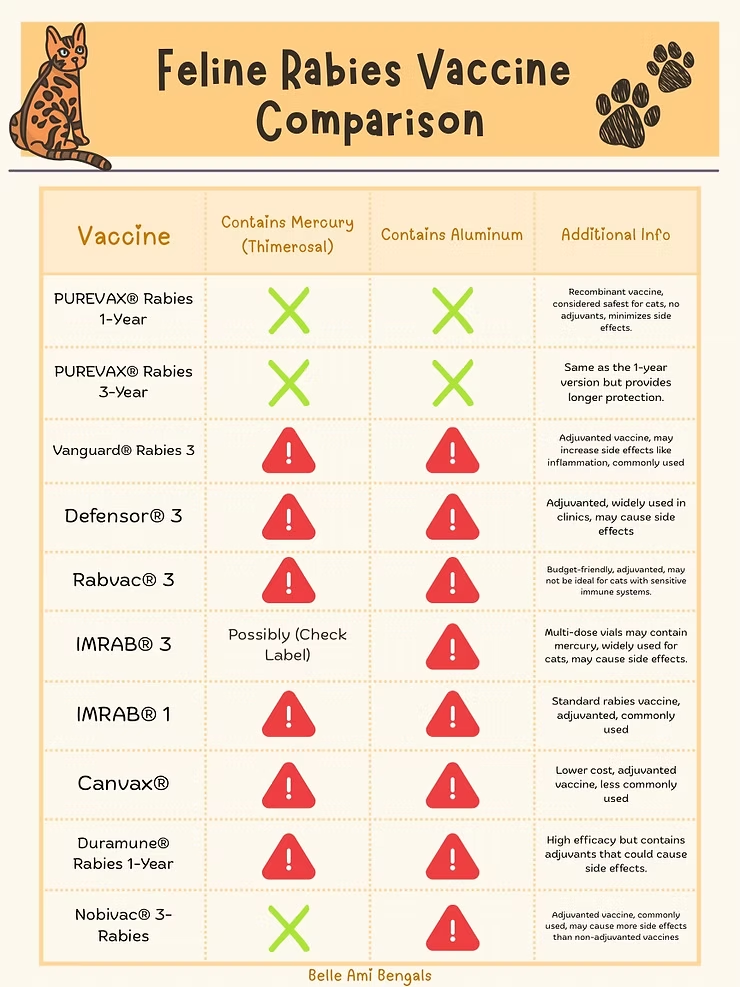
Tip: Some single-dose versions may be thimerosal-free. Always ask your vet to double-check.
Plan Ahead and Ask the Right Questions About Rabies
A lot of new cat owners are surprised to learn that many veterinary clinics—especially emergency clinics—won’t accept a kitten as a patient unless they’ve already had a rabies vaccine. Even if your kitten is clearly healthy and well cared for, you may still be turned away without proof of vaccination.
That’s why I strongly recommend calling around ahead of time, well before your kitten turns 16 weeks. Ask each clinic:
“Do you carry the PUREVAX® Rabies vaccine for cats, or can you order it?”
Not all clinics keep PUREVAX® in stock. Many carry only cheaper, adjuvanted rabies vaccines by default—but most are able to order PUREVAX® if you request it in advance. It might cost a little more, but the difference in safety is worth it—especially for sensitive breeds like Bengals and Ragdolls.
Whether you’re getting a kitten from me or from another ethical breeder, have your PUREVAX® appointment scheduled ahead of time, so you’re not forced into a last-minute decision that could compromise your cat’s health.
If you love your vet and don’t want to switch because they don’t offer PUREVAX®, just have it done at a clinic that does and show the records to your vet! So simple!
What You Should Ask Before Any Vaccine is Given
Don’t be afraid to speak up—you are your cat’s only advocate. When the time comes to vaccinate, make sure to ask:
- Is this vaccine adjuvanted?
- Does it contain aluminum or mercury (thimerosal)?
- If it does, do you carry any alternatives?
- Can you order any alternatives?
- Is this vaccine necessary for an indoor only cat? (if that’s your situation)
- If it’s time for a booster can we just run a blood titer test instead? (because research has shown they last much longer than 1-3 years)
You have every right to choose the safest vaccine option available—even if that means asking your vet to special-order it. Most will be happy to do it once they know you’re informed and committed to doing what’s best for your cat.
What Lisa A. Pierson, DVM Thinks About the Rabies Vaccine
Dr. Pierson has a website dedicated to cat health and nutrition with a wealth of information. She has dealt with vaccine injured cats and knows the dangers of over vaccinating. She is extremely knowledgeable about the rabies vaccines. Please visit her website www.catinfo.org to learn about many health topics concerning cats and prioritizing health over money made from vaccines and terrible cat foods.
My Final Thoughts
Rabies vaccines are non-negotiable, but which vaccine you use absolutely matters. For your cat’s long-term health—and especially for breeding cats—I strongly recommend using only PUREVAX® Rabies 1-Year or 3-Year. They’re specifically made for cats, and they’re free from the additives that carry the most risk.
Your cat’s life is worth asking a few extra questions at the vet’s office. It’s a small step that could make a huge difference.
If you ever have questions about vaccine choices or feline health in general, feel free to reach out. I’m happy to help however I can—and always looking out for the best for our cats.